Case Study
Leading German PSP highlights the Acuity Ultra’s speed and versatility as being essential to operations, while providing a future-proof solution for the ever-changing market.

Fokina GmbH

Eppingen, Germany

Acuity Ultra

The Acuity Ultra fits in perfectly with our other print equipment here, and has become the heartbeat of our business.
Sven Breiter | Fokina GmbH
Highlights
- Products include large format photographic, as well as screen, digital and textile printing
- Introduced to the Acuity Ultra Roll-fed printer in 2019 and was impressed with the print quality and speed
- The Acuity Ultra was installed in March 2020, following increased customer demand
- The investment has provided Fokina with new business opportunities
- The roll-fed printer enables Fokina to offer the best quality products at the fairest prices
- Delighted with the support provided by Fujifilm throughout the sales and installation process
One of Germany’s leading providers of large format photographic printing, as well as screen, digital and textile printing, Fokina GmbH is a full service provider for a range of sectors, including point of sale, retail, public facilities and exhibition stands. Based in the town of Eppingen, just north of Stuttgart, the company has a proud history dating back more than 30 years. Over this time, Fokina has built up a diverse portfolio of print and production machinery to produce the high quality products it is renowned for. And one installation in particular is helping to drive quality standards even higher – Fujifilm’s superwide 5m Acuity Ultra, which was installed in March 2020.
“Our investments in high-tech machinery, qualified employees and intelligent management systems are paramount to our success as a business,” says Sven Breiter, CEO of Fokina. “Companies from all over Germany, the EU and around the world are supplied with our products, so being highly efficient and putting the customer at the top of our priorities is our motto.”
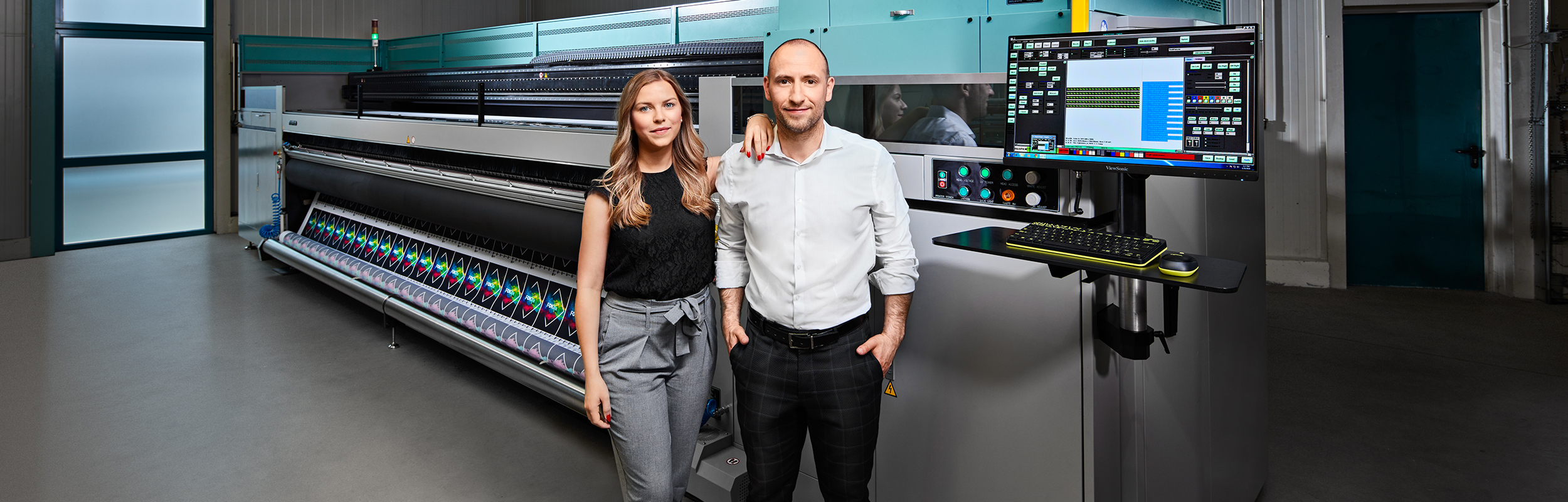
Fokina’s high quality banners, textiles and wallpapers are some of the company’s most popular products. When management noticed demand increasing in 2019, they knew that adding more printing equipment would be necessary to meet these requirements. It was then that they were introduced to Fujifilm’s Acuity Ultra, and they never looked back. “We first noticed the Acuity Ultra at a trade fair in 2019,” says Saskia Friederich, also a CEO at Fokina. “We were immediately impressed by the print quality and the speed, so we kept in contact with Fujifilm after the event, visiting their Advanced Print Technology Centre in Brussels where we saw the Acuity Ultra first hand. Witnessing its print quality for ourselves reaffirmed our initial view that it was the right machine to add to our already impressive production portfolio.”
For Sven, Saskia and their staff, the Acuity Ultra is fitting in very well at Fokina. “The team working with the Acuity Ultra are very impressed by the quality it produces as well as its high speed,” says Sven. “It’s also incredibly versatile, ink consumption is low and its 5m width has provided us with new business opportunities that we would otherwise not have been able to secure. The combination of the high quality and productivity that it offers is exceptional.”

It’s incredibly versatile, ink consumption is low and its 5m width has provided us with new business opportunities that we would otherwise not have been able to secure.
Sven Breiter, CEO | Fokina GmbH
“We are a family-run business always looking to future-proof ourselves. The print market is highly competitive, and at Fokina we always want to provide the best products at the fairest prices; the Acuity Ultra allows us to do that. It fits in perfectly with our other print equipment here, and has become the heartbeat of our business.”
Sven also has high praise for the Fujifilm team: “The sales and support staff at Fujifilm have been excellent from day one. We’ve always felt in good hands, which is essential when you’re purchasing new equipment. The Acuity Ultra was our first ever purchase from Fujifilm, and we envisage it won’t be the last.”
Acuity Ultra
Find out more about the Acuity Ultra’s ultra-high quality and versatility, and how its low ink consumption can improve ROI
Discover the Acuity UltraRead the article
Reading time: 8 minutes
The Fujifilm name has been closely associated with UV inkjet technology since 2005 – the year in which Fujifilm acquired the pioneering UV inks and inkjet company, Sericol, based in the seaside town of Broadstairs in Kent. Founded in 1950, Sericol had long been a screen inks pioneer and market leader. Then, in the 1970s, it launched the world’s first instant curing UV screen inks and built on this experience to commercialise the first UV digital inkjet systems and inks in the world in 1999. The immediate and rapid growth in this new sector resulted in Sericol being presented with a Queens Award for Enterprise in 2004 for its role in developing and commercialising these new UV inkjet systems.
With the Fujifilm acquisition in 2005, forming what is now known as Fujifilm Speciality Ink Systems, the company has gone on to produce some of the most highly regarded UV cured inkjet inks and systems on the market, including the popular Acuity range of wide format printers launched in 2007, and now with more than 1,800 global installations. This 20 years of experience means Fujifilm has developed a keen sense of what the market really needs, and perhaps more importantly, how it is likely to change in the future.
Market maturity
The early years of wide format UV inkjet development were largely defined by advances in technology that delivered rapid and continual increases in print speed and quality. In 2018, however, Fujifilm recognised that the market had reached an advanced degree of maturity, and a point at which a very high level of quality and productivity was assumed. New product launches were tending to offer only very marginal improvements in print speed and quality. In addition, Fujifilm also became aware that there was an opportunity to use these evolving technologies to drive improvements in wide format print ROI.
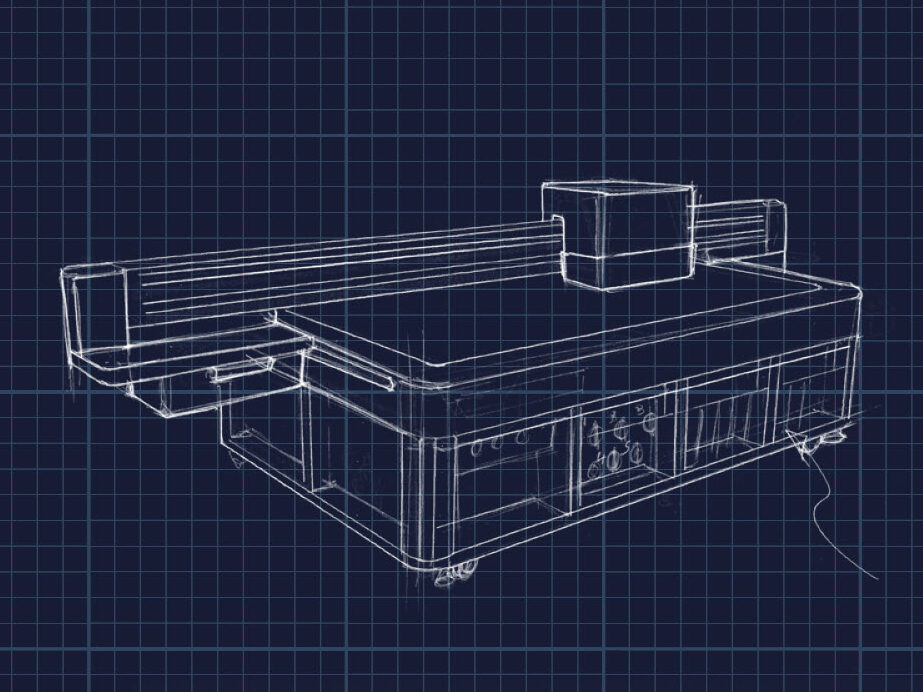
The market had reached a tipping point – a point at which more of the same, with minor improvements, was no longer enough. The market needed something fundamentally new. So, three years ago, Fujifilm made a strategic decision to start the process of rethinking its Acuity wide format offering; focusing on new ways to deliver improved value, versatility and ease of use and in particular on defining a new level of print ROI. Fujifilm set out to do what it had first done back in 2000: to create a new blueprint for wide format.
Back to first principles
In terms of printing hardware and systems, Fujifilm has always been a technology company first and foremost, rather than a manufacturer, working with a range of OEM partners and other specialists to provide the best possible platforms for its inkjet technology. The Acuity range already has a deserved reputation for quality and reliability, but for this next chapter in the Acuity story, Fujifilm wanted a new level of design influence and control in order to take full advantage of what was possible, to create something that offered far more than mere marginal improvements.
To do this, the Fujifilm team returned to first principles, starting with an almost blank canvas and a challenge to strip everything back and create a completely new and improved range of machines. To help with this process, they brought in an award-winning industrial design company and tasked them not simply with making changes to what had gone before, but with completely rethinking the press design to maximise the value, productivity, ease of use and – most importantly – the ROI.
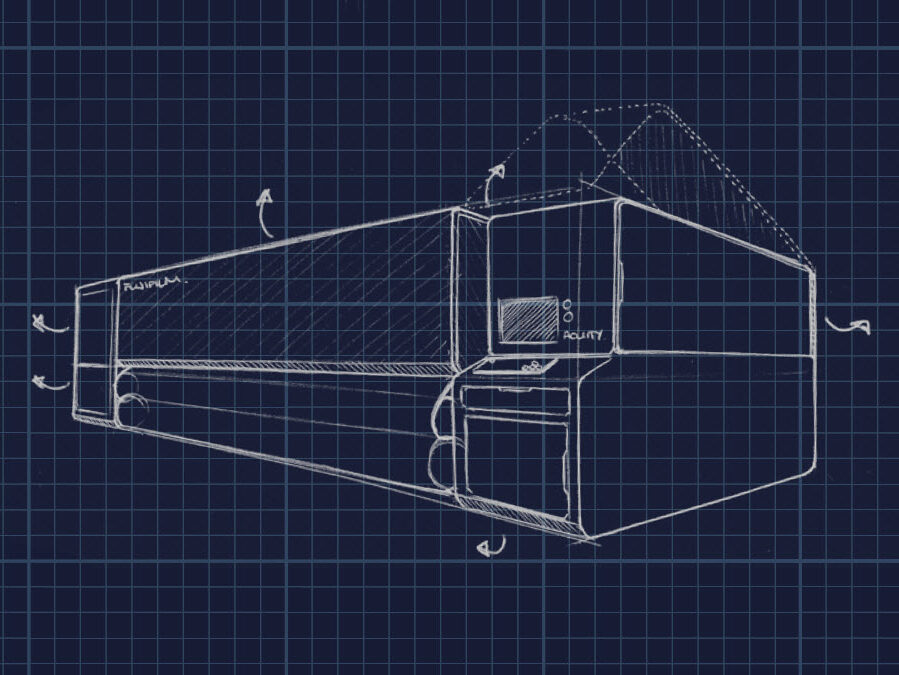
Fujifilm’s vision was to combine stunning aesthetics with exceptional functionality. In order to achieve this, the first step was to carry out wide ranging research, so the two companies embarked on an extensive and intensive listening exercise, meeting not only with business owners and directors, but also with press operators who had experience of working not only with Fujifilm machines, but others too.
This exercise produced an understanding of what worked, what didn’t, and what changes (whether simple or radical) would improve the value, versatility, usability, productivity and ROI, while retaining an eye for the environment in terms of reducing waste an making for a safer and more contented workplace.
It was clear from this exercise that the owners and directors of these companies want equipment that’s reliable, fast and able to give them a rapid return on investment, but being in a creative industry, they also want machines that look stylish and that are easy to work with. For press operators, it was also clear that good machine design – aside from the obvious benefits to productivity – can be the difference between job satisfaction and great frustration, and the listening exercise uncovered many aspects of machine design that could be improved upon.
Fujifilm combined the findings from this extensive research exercise with its own knowledge and inkjet expertise to provide a structure for the design process. In parallel, the team also carried out comprehensive research into the best components and technologies on the market, and the best routes to assembly and manufacture. The output from all this research and creative thinking was effectively a completely new blueprint for what a UV inkjet system of the future should look like, how it should perform, and how it could be brought to life.
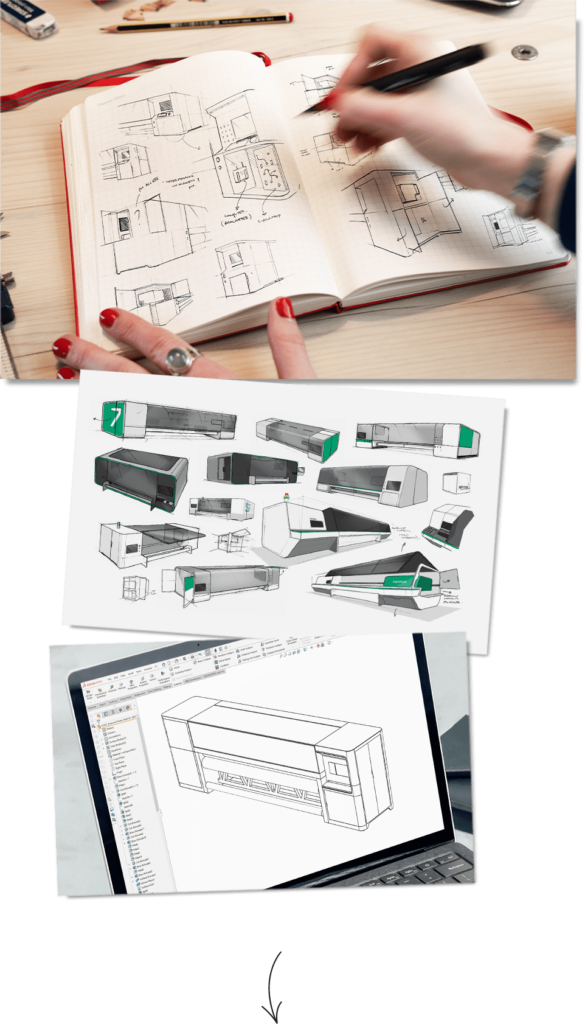
Bringing it all together
Four design criteria emerged from the blueprint that informed all design choices and helped to identify the right manufacturers and suppliers to work with, as well as the OEM partners to help to bring it all together. These were: quality, value, performance and ease of use. In addition, every component part selected was chosen with these four criteria in mind, from the printheads to the user interface, lamps, static control and vacuum solutions. In all cases, Fujifilm made choices based on answering questions like: “does it do what it needs to do?” or “could it be done better?” Nothing was left unchanged that could be improved.
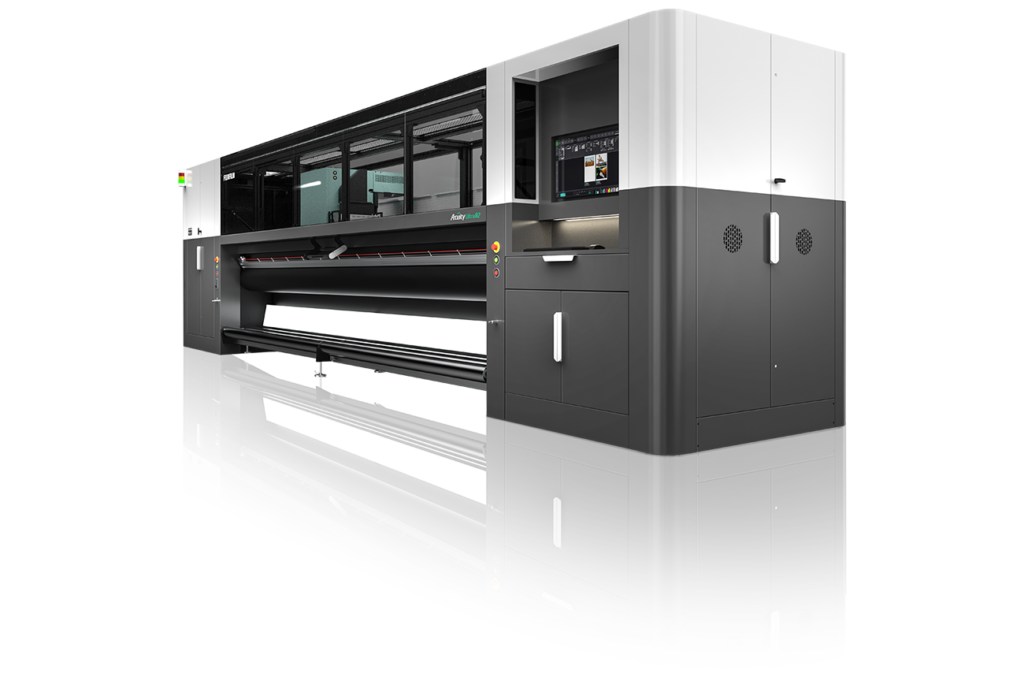
Three years on, the result of this blueprint is the all new Acuity range, designed and developed by Fujifilm. First and foremost, this new Acuity range has been designed to redefine the price / performance and ROI that can be expected from a UV inkjet system. This has been achieved through careful design choices, stripping back features that don’t add value, and maximising quality, value and performance where it matters most. The result is a high performance range available at a competitive price with low cost in use, a combination that radically changes print ROI.
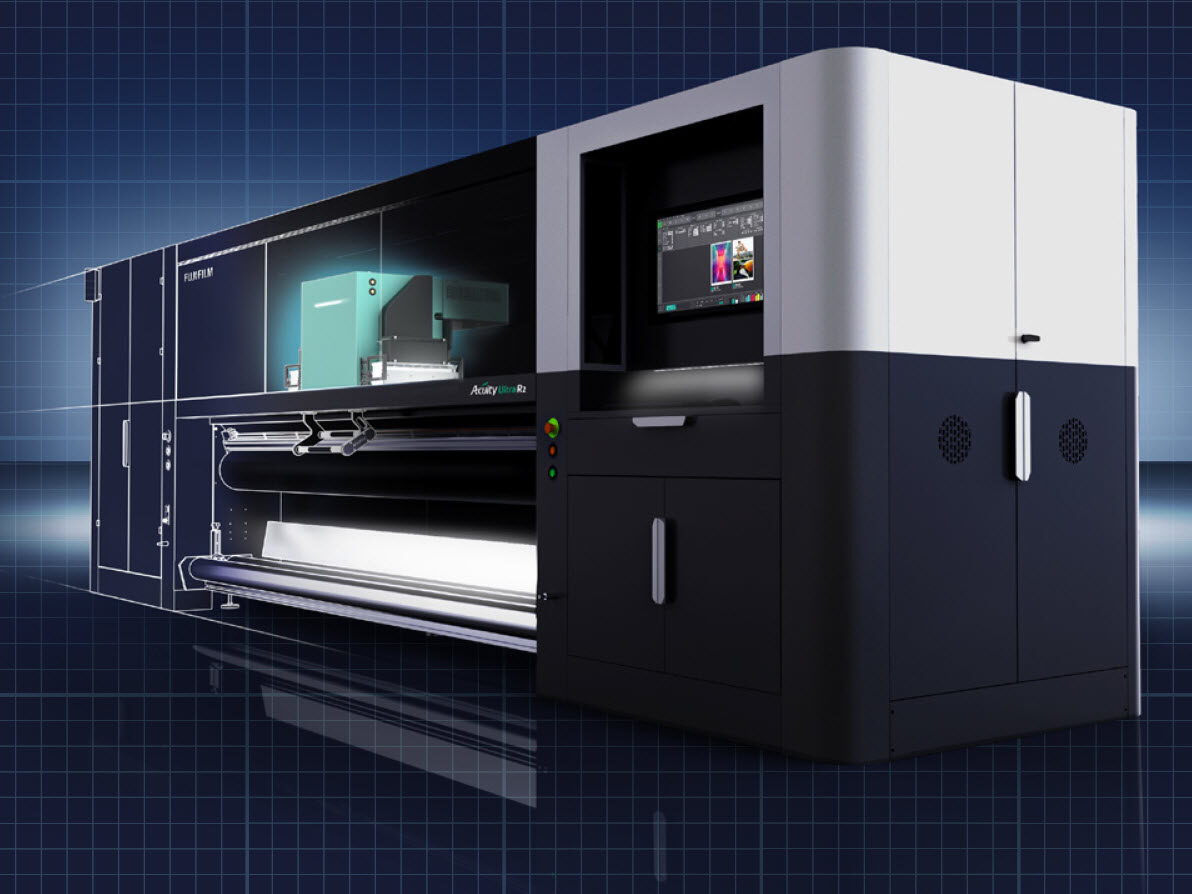
The new Acuity range is also built for printers from the ground up, resetting expectations around operational ease of use. The ‘question everything’ approach to the whole process has allowed Fujifilm to put the operator experience front and centre. “We’ve taken on board the frustrations and inconveniences identified in our extensive market research, and addressed those concerns to create a range that is a real joy to work with and operate, with the additional benefit of maximising uptime and productivity,” says Kevin Jenner, European Marketing Manager, Fujifilm Wide format Inkjet Systems.

We’ve taken on board the frustrations and inconveniences identified in our extensive market research, and addressed those concerns to create a range that is a real joy to work with and operate, with the additional benefit of maximising uptime and productivity.
Kevin Jenner | European Marketing Manager
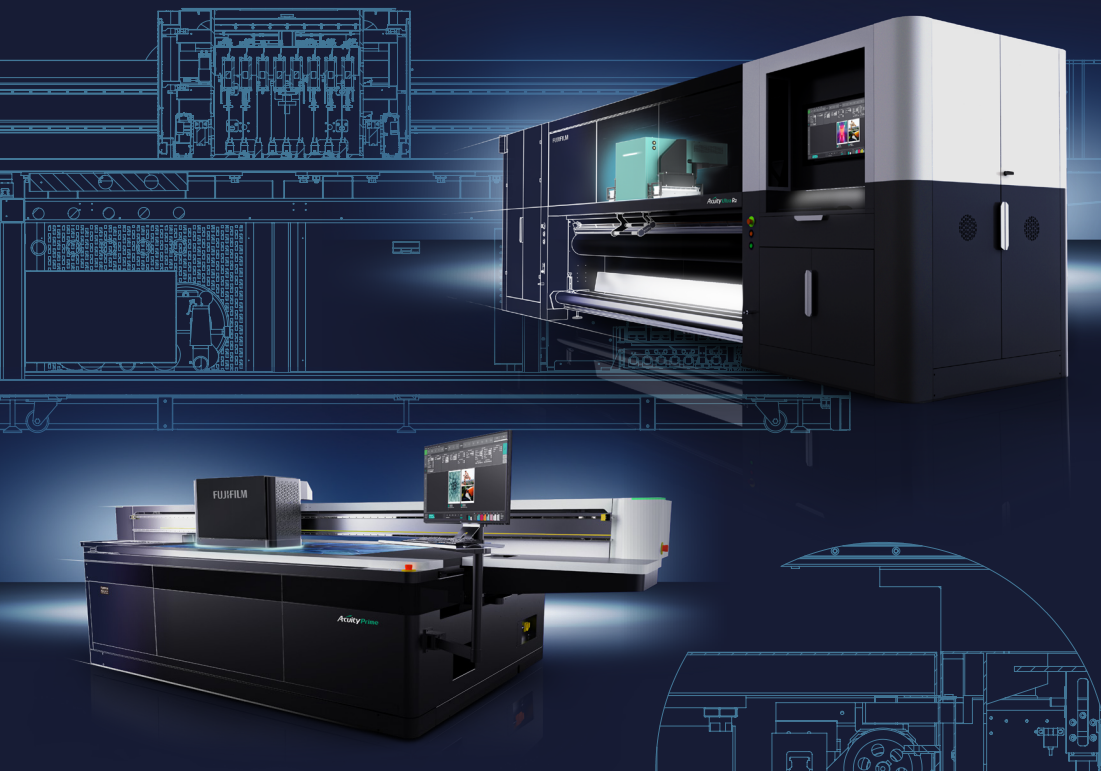
The first two printers made to this new blueprint are the Acuity Ultra R2 and the Acuity Prime. The Acuity Ultra R2 is a completely redesigned version of the Acuity Ultra, which itself had set a new standard for superwide print when it was launched in 2018. The Acuity Prime is an entirely new, mid-range flatbed which offers ease of use and print ROI unmatched by anything else on the market.
For more than 10 years since its initial launch, the Acuity range has built a reputation for quality, versatility and value and this new range will enhance the Acuity brand on all those fronts, while maintaining the reliability standards that have always been the hallmark of Fujifilm’s inkjet systems. And of course, the new printers take advantage of Fujifilm’s renowned UV inkjet ink.
Learn more about the Acuity range
Discover moreThank you for your enquiry, someone will be in contact soon.


